Dental Crowns 2026 Cost: $900 to $1,500 in Quebec

How much does a dental crown cost in 2026? In Quebec, the dental crown cost typically ranges between $900 and $1,500 per tooth, all inclusive. The price depends on the material (porcelain, zirconia, porcelain-fused-to-metal), the position of the tooth, the complexity of the preparation, and the dental laboratory used. In Brossard, most crowns placed at Centre dentaire Taschereau fall within this range.

This guide explains why the price varies from one case to another, what your dental insurance generally covers, and how to avoid hidden costs. The information reflects the 2026 Fee Guide of the Association des chirurgiens dentistes du Québec (ACDQ) and our day-to-day practice in Brossard.

Key points

Price range $900 to $1,500 per tooth, all inclusive, per the 2026 ACDQ Fee Guide.
Materials Porcelain-fused-to-metal (PFM), all-ceramic (e.max), monolithic zirconia.
Lifespan 10 to 15 years for PFM and e.max; 15+ years for zirconia.
Insurance Private: 50% – 80% under major services. RAMQ: not covered (adult). CDCP: eligible patients.

Dental crown cost in 2026: the price range

Here are the typical Quebec price ranges in 2026 by crown type:

Crown type Cost per tooth (2026) Lifespan Main indication
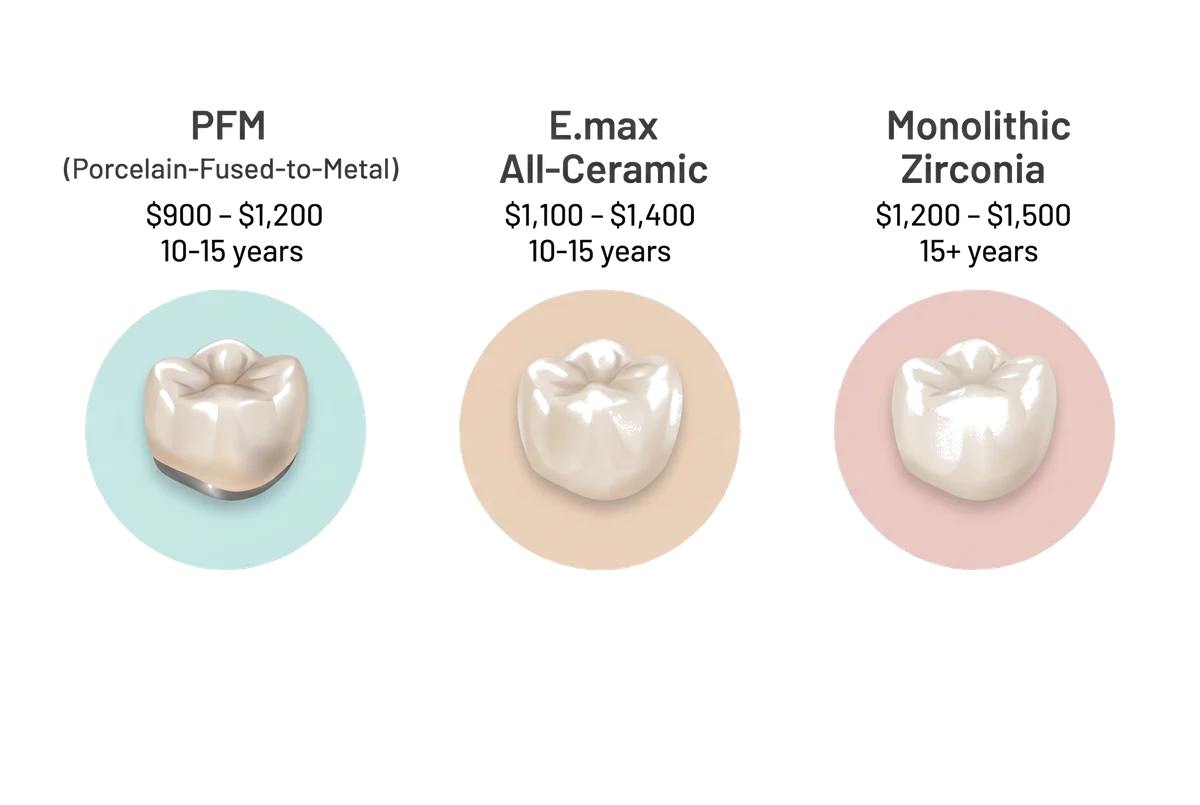
Porcelain-fused-to-metal (PFM) $900 – $1,200 10 to 15 years Posterior molars, tight budget
All-ceramic (e.max) $1,100 – $1,400 10 to 15 years Front teeth, high aesthetics
Monolithic zirconia $1,200 – $1,500 15+ years Molars, bruxism
Temporary crown Included 2 to 4 weeks Between appointments

Dental crown cost in 2026 — visual comparison of 3 crown types in Quebec: PFM porcelain-fused-to-metal $900–$1,200, e.max all-ceramic $1,100–$1,400, monolithic zirconia $1,200–$1,500

Prices are indicative and based on the 2026 ACDQ Fee Guide. The final fee is confirmed after the clinical exam. X-ray, local anesthesia and final cementation are included.

Why $900 to $1,500? The 6 factors that move the price

1. The crown material

This is the biggest single factor. Porcelain-fused-to-metal (PFM) remains the most economical option because it uses a metal core covered with porcelain — a technique proven since the 1960s. All-ceramic crowns (e.max) are more translucent and look more natural on a visible tooth, but they require a more demanding bonding protocol. Monolithic zirconia is the strongest material: we favour it for patients who grind their teeth (bruxism) or who need a crown on a heavily loaded molar.

2. The position of the tooth

A crown on an incisor or a canine (visible zone) requires finer shade work and translucency layering — that pushes you toward the upper end of the range. A crown on a posterior molar can usually be made in monolithic zirconia or PFM with no aesthetic compromise.

3. Preparation complexity

If the tooth has lost a lot of structure (deep decay, fracture), a core build-up may be needed before the crown can be placed. This step is billed separately (typically $200 to $350) and is not included in the crown fee itself.

4. Prior root canal treatment

If the tooth needs to be devitalized before receiving the crown, the root canal is billed separately (typically $900 to $1,600 depending on the number of canals). A crown on a root-canal-treated tooth is almost always indicated to prevent a later vertical fracture.

5. The technology used

CAD/CAM crowns (computer-designed and milled at the lab) offer a superior marginal fit, though the cost can be slightly higher than a crown made with the traditional lost-wax technique. Long-term, a better fit reduces the risk of recurrent decay under the crown.

6. The dental laboratory

A crown made by a Quebec or Canadian laboratory costs slightly more than a crown outsourced overseas, but quality control, material traceability and Health Canada compliance are superior. We work with Quebec-based labs.

Insurance coverage: what’s left for you to pay?

Most private dental plans cover crowns under the “major services” category, with typical reimbursement of 50% to 80%, up to the annual maximum of the policy (often $1,500 to $2,500 per year). In practice:

  • $1,000 PFM crown, 50% reimbursement → you pay about $500.
  • $1,400 zirconia crown, 80% reimbursement → you pay about $280.

The RAMQ does not cover crowns for adults. The Canadian Dental Care Plan (CDCP) has covered certain crowns for eligible patients since 2024, under specific conditions and with pre-authorization — bring your member number to your consultation so we can verify your coverage.

We provide a written treatment plan with cost estimate before any work begins. You can submit it to your insurer for pre-authorization and know your out-of-pocket cost in advance.

What does the cost actually cover?

A $1,200 dental crown typically includes:

  • The initial exam and targeted X-ray (the full diagnosis may be billed separately at the consultation).
  • Local anesthesia and tooth preparation (reduction of approximately 1.5 to 2 mm of tooth structure).
  • Digital or conventional impression.
  • A temporary crown for the 2–4 week waiting period.
  • Fabrication at a qualified dental laboratory.
  • Final placement, cementation and occlusal adjustment.
  • A follow-up check a few weeks later.

Crown or no crown? When is it actually indicated?

A dental crown is justified when:

  • A tooth has undergone root canal treatment — the crown prevents vertical fracture.
  • A large cavity has destroyed more than 50% of the tooth structure.
  • A tooth is fractured or shows a deep crack line.
  • A very large existing filling (amalgam or composite) is failing.
  • The patient wishes to correct the shape or shade of a visible tooth (aesthetic option).

Conversely, if the tooth still has more than 60% of healthy structure, a composite filling ($200 – $450) or a ceramic inlay/onlay ($700 – $1,100) can be a more conservative alternative. At your exam in Brossard, our team will explain which option fits your case best.

How is a crown placed? The two-appointment procedure
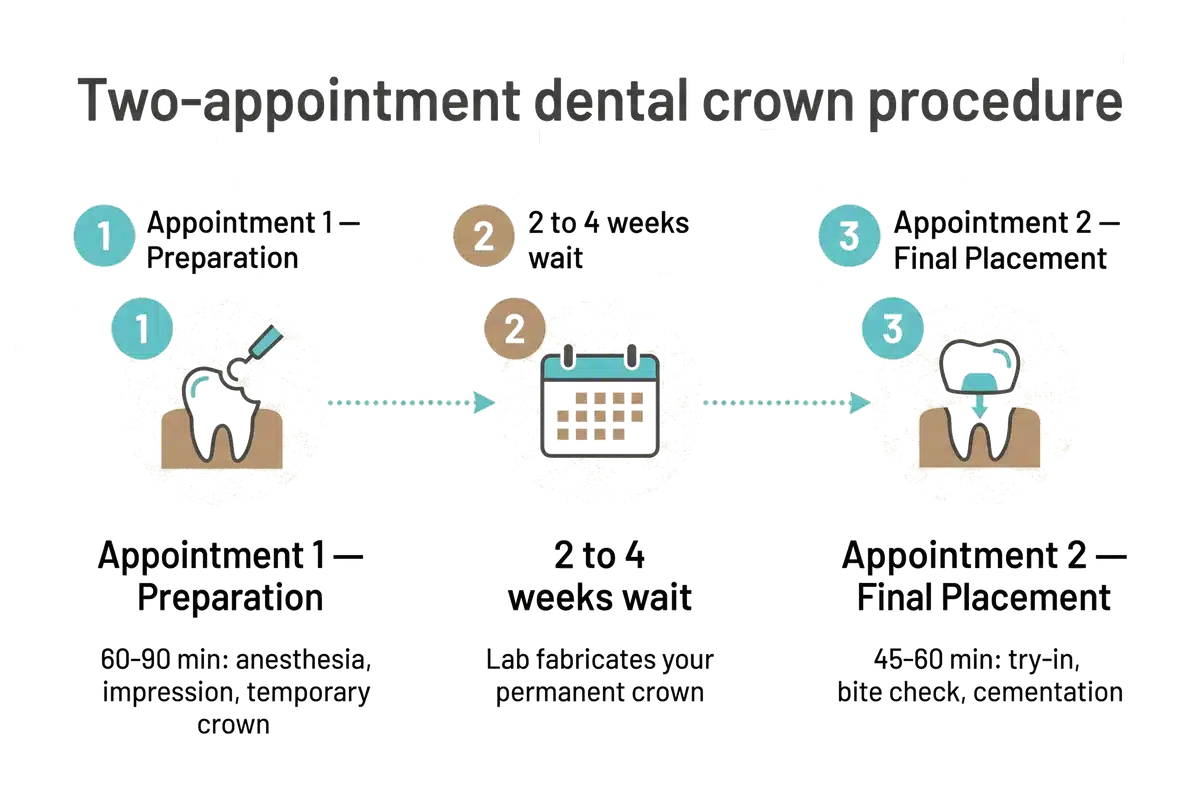
Two-appointment dental crown procedure: Appointment 1 (60-90 min — anesthesia, impression, temporary crown), 2 to 4 week wait, Appointment 2 (45-60 min — try-in, bite check, cementation)

Placement follows the standard protocol described on our Crown and Bridge service page:

  1. 1st appointment (60–90 min) — Local anesthesia, tooth preparation, impression (digital or conventional), placement of a temporary crown.
  2. 2 to 4 week interval — The lab fabricates the custom permanent crown.
  3. 2nd appointment (45–60 min) — Removal of the temporary, try-in of the permanent crown, shade and bite verification, final cementation.

How to lower the cost of a crown without sacrificing quality

  • Request pre-authorization from your insurer before placement — you’ll know your exact out-of-pocket.
  • Spread major work across two calendar years if you need several crowns (the annual insurance cap resets).
  • Check your eligibility for the CDCP (Canadian Dental Care Plan) if your family net income is below $90,000.
  • Choose monolithic zirconia for a back molar: its longer lifespan (15+ years) often makes it the best value over a 20-year horizon.
  • Avoid “$600 crown” promotions: those rates usually rely on non-certified labs or off-spec ceramics.

Frequently asked questions about dental crown cost in 2026

Why does the cost of a dental crown vary so much between clinics?

The gap comes mostly from the material, the lab used and the case complexity. A $700 crown may look attractive, but it is often made overseas without Health Canada traceability or uses a lower-density ceramic. In Quebec, a crown placed according to the ACDQ Fee Guide almost always falls in the $900 to $1,500 range, all inclusive.

Does a zirconia crown last longer than a porcelain crown?

Yes, in most cases. Monolithic zirconia has a flexural strength above 1,000 MPa, versus roughly 400 MPa for lithium disilicate (e.max) and around 100 MPa for traditional feldspathic ceramic. That’s why we recommend zirconia for molars and for patients who grind their teeth. For a front tooth, the translucency of e.max gives a slightly more natural-looking result.

Does dental insurance cover crowns in Quebec?

RAMQ does not cover crowns for adults. Private insurance plans cover them under the “major services” category at 50% to 80% of the ACDQ Fee Guide, up to the annual policy maximum. The Canadian Dental Care Plan (CDCP) can cover certain crowns for eligible patients, with pre-authorization. Centre dentaire Taschereau submits your treatment plan to your insurer before any work begins to confirm your out-of-pocket cost.

How long does a dental crown last?

With good hygiene (brushing twice daily, daily flossing, a check-up and cleaning every 6 months), a crown typically lasts 10 to 15 years — and 15+ years for zirconia. The main enemy is not the crown itself but recurrent decay at the junction between the crown and the natural tooth, which is why regular follow-up matters.

Is placing a crown painful?

No. The preparation is done under local anesthesia and is painless. Hot and cold sensitivity may persist for 1 to 2 weeks, especially if the tooth has not been devitalized. If sensitivity persists beyond 3 weeks, a return visit is needed — a bite adjustment usually resolves the situation.

Can a crown be placed on a dental implant?

Yes — it is the usual final step of a dental implant treatment. The implant crown is billed separately (typically $1,400 to $1,800 including the abutment), and the total cost of a complete implant case (surgery + abutment + crown) usually falls between $3,500 and $5,000 per tooth in Quebec in 2026.

What’s the price difference between a crown and a veneer?

A dental veneer ($700 – $1,200 per tooth) only covers the visible face of the tooth and preserves more of the natural structure. A crown ($900 – $1,500) covers the entire tooth and is indicated when the tooth is weakened or root-canal treated. For a purely aesthetic smile makeover on a healthy tooth, a veneer is usually the better choice.

Book a crown consultation in Brossard

An exact quote can only be confirmed after an exam and a targeted X-ray. The initial consultation includes a full diagnosis, costed treatment options, and a written estimate that can be submitted to your insurer for pre-authorization.

Book an appointment

Centre dentaire Taschereau

8245 boul. Taschereau, suite A-14
Brossard, Quebec J4Y 1A4
Phone: (450) 912-1688

Article reviewed by the clinical team of Centre dentaire Taschereau, Brossard. The dentists at the clinic are members of the Ordre des dentistes du Québec and the Association des chirurgiens dentistes du Québec. The price ranges shown are indicative and based on the 2026 ACDQ Fee Guide. The final fee is confirmed in writing after the clinical examination. Last updated: May 2026.
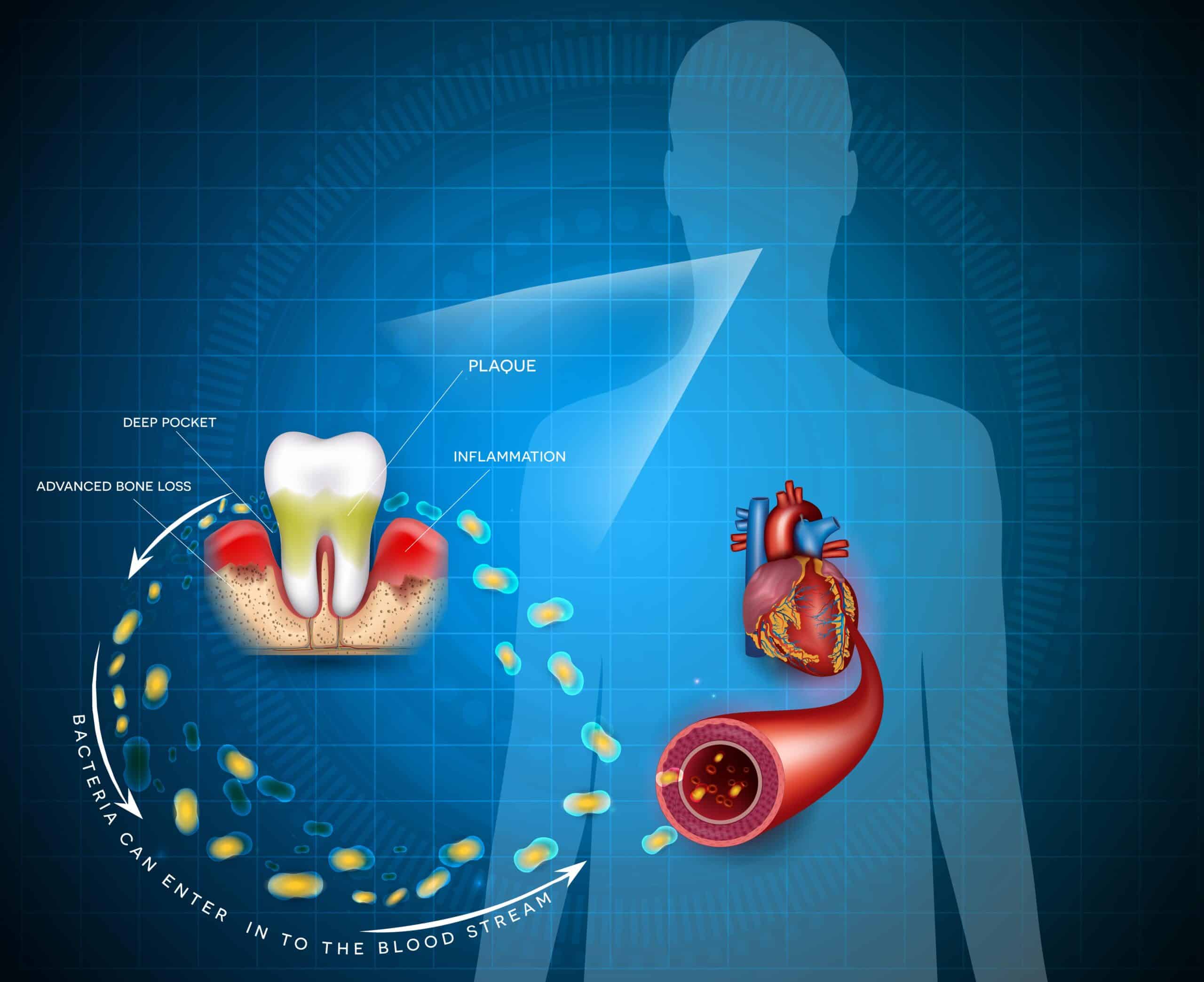
Periodontitis: Serious Health Consequences

Gingival and periodontal diseases, often silent in their early stages, can have serious consequences for oral and general health if left untreated. Periodontitis, an advanced form of gum disease, deserves special attention. Let’s explore the stages of development of this condition, its effects on dental tissues — which can lead to tooth loss — as well as the risks it poses to the body as a whole.

The development of gingival and periodontal disease

It generally begins with gingivitis, a reversible inflammation of the gums caused by the accumulation of dental plaque.

Typical signs of gingivitis:

  • Red, swollen, and more sensitive gums.
  • Bleeding when brushing or flossing.

If left untreated, gingivitis can progress to periodontitis. At this stage, bacteria penetrate deeper beneath the gum line, around the roots of the teeth. The proliferation of large numbers of bacteria triggers an excessive immune response, and they release toxins. These phenomena eventually cause irreversible tissue damage.

Tissue destruction

Periodontitis does not affect only the gums. It causes progressive destruction of the tissues that support the teeth, including:

  • The cementum, which covers the tooth roots.
  • The periodontal ligaments, which hold the teeth in place.
  • The alveolar bone, which supports the dental roots.

Over time, this deterioration creates deep pockets between the tooth roots and gums, making the elimination of bacteria even more difficult. These pockets worsen if treatment is not initiated, accelerating the destruction of supporting structures.

Tooth loss

When periodontitis reaches an advanced stage, teeth become mobile due to the weakening of the surrounding tissues and bone.

Consequences of tooth loss:

  • Reduced chewing ability, leading to dietary limitations.
  • Consequences for remaining teeth, such as misalignment or premature wear.
  • Premature aging of the lower face.
  • Negative psychological impacts related to the appearance of the smile.

Possible consequences of periodontitis for general health

Periodontitis is serious, and its effects can impact the entire body. The bacteria responsible for tissue infection can enter the bloodstream, triggering systemic inflammatory responses.

General health risks include:

  • Cardiovascular disease: periodontitis is associated with an increased risk of stroke and heart attack due to chronic inflammation that can affect the arteries.
  • Diabetes: a bidirectional relationship exists between diabetes and periodontitis. Poor management of one can worsen the other.
  • Respiratory problems: oral bacteria can be inhaled, contributing to pulmonary infections, particularly in elderly individuals.
  • High-risk pregnancy: periodontitis is linked to an increased risk of premature birth and complications associated with low birth weight.

Prevention and treatment of periodontitis: effective solutions

The good news is that periodontitis can be prevented or controlled through rigorous prevention and professional care.

Key prevention steps include:

  • Daily oral hygiene (brushing and flossing).
  • Regular dental visits for professional cleanings.
  • A balanced diet providing all the nutrients needed for healthy gums.

For more advanced cases, treatments such as root planing, antibiotics, or even periodontal surgery may be necessary.

Take care of your gums to preserve your overall health

Periodontitis is much more than a simple gum disease: its consequences can affect your entire body. If you notice signs such as bleeding gums, persistent bad breath, or loose teeth, do not wait to consult a professional. At Centre Dentaire Taschereau, our team is here to guide you every step of the way and direct you toward solutions tailored to your needs.

New Year’s Resolutions for My Smile in 2025

With the start of the new year, why not make resolutions that will benefit your oral health? Your smile deserves as much attention as the rest of your body, and small habits can have a considerable impact on your well-being. Here are four simple but powerful resolutions for a radiant smile in 2025.

  1. Floss every day

Did you know that even thorough brushing is not always enough to remove dental plaque from the spaces between your teeth? Flossing is essential for reaching these hard-to-access areas and preventing the development of cavities or gum disease. By adopting this daily habit, you can:

  • Reduce the risk of gum inflammation.
  • Eliminate food residues that cause bad breath.
  • Keep your teeth healthier for longer.

Practical tip: Keep your floss in a visible spot, such as next to your toothbrush, so you never forget it.

  1. Drink more water

Drinking water is not only good for your body — it is also excellent for your teeth. Staying well hydrated stimulates saliva production, which helps neutralize acids and prevent cavities. Here are some other benefits:

  • Water helps rinse away food particles and sugary residues.
  • It protects your teeth against dry mouth.
  • Good hydration promotes fresher breath.

Tip: Make it a habit to drink a glass of water after each meal to reduce the action of cavity-causing bacteria.

  1. Take better care of my teeth

Protecting your teeth does not only mean cleaning them well, but also preserving them from trauma, big or small, that could damage them. A few simple habits can make all the difference:

  • Avoid biting your nails: this habit can weaken your teeth, cause cracks, or damage your enamel. It also exposes your mouth to bacteria.
  • Don’t use your teeth as a tool: your teeth are not designed to open packaging, cut thread, or remove bottle caps. These actions can lead to chips or fractures.
  • Wear a mouthguard if you play sports: whether for contact sports or activities with a risk of falls, a custom mouthguard protects your teeth from impacts.

By adopting these reflexes, you will avoid unnecessary injuries and preserve the health and integrity of your teeth. If an accident or trauma occurs, see your dentist promptly to limit the damage.

  1. Schedule my next dental visit

Regular dental visits are essential for detecting problems at an early stage and maintaining good oral hygiene. In 2025, commit to scheduling your exams twice a year. During these visits, your dentist and dental hygienist can:

  • Perform a professional cleaning to remove plaque and tartar.
  • Quickly identify and treat problems such as cavities or early-stage gingivitis.
  • Advise you on hygiene practices and dental products suited to your needs.

Suggestion: Book an appointment now at Centre Dentaire Taschereau to start the year on the right foot.

Take care of your smile today

By adopting these four simple resolutions, you will contribute to preserving the health and beauty of your smile in 2025. And remember: good dental hygiene reflects overall good health. The entire team at Centre Dentaire Taschereau is here to support you and meet your oral health needs.

Why Remove Wisdom Teeth?

Wisdom teeth — the last molars to erupt — are well known for the discomfort they cause. While some people keep them without issue, they are often associated with oral health complications. Why are these teeth no longer necessary? What risks do they pose, and when should you see a dentist? Here is everything you need to know to understand the common reasons for their extraction.

What are wisdom teeth and why are they no longer useful?

Wisdom teeth, or third molars, are the last permanent teeth to develop, typically between the ages of 17 and 25. At one time, they were essential for our ancestors, whose diet consisted of hard, unprocessed foods. These extra teeth compensated for the rapid wear of the first molars.

Today, thanks to a varied diet and improved oral hygiene, wisdom teeth are no longer indispensable. Furthermore, the evolution of the human jaw has reduced the available space for their eruption, which is why they so often cause problems.

They are difficult to clean properly

Wisdom teeth are located at the very back of the mouth, making them hard to reach with a toothbrush or floss. This typically results in poor plaque removal and the formation of tartar on these teeth. It also increases the risk of cavities and gum inflammation around them.

Even with rigorous oral hygiene, the position of these teeth makes maintenance difficult, which can lead to long-term complications.

Wisdom teeth often erupt irregularly

When wisdom teeth grow in, they are frequently mispositioned or unable to emerge fully (impacted or partially impacted teeth).

Types of irregular eruption:

  • Forward tilting: the tooth grows toward the second molar, potentially damaging it and its roots.
  • Partial eruption: part of the tooth remains covered by the gums, creating a space where bacteria can accumulate.
  • Horizontal or oblique position: the tooth remains blocked in the bone or grows in an abnormal direction.

These situations can lead to pain, crowding of other teeth, or even the formation of cysts in cases of repeated infections.

There is a risk of infection

Mispositioned or partially erupted wisdom teeth increase the risk of local infections.

Common infections include:

  • Pericoronitis: a painful inflammation of the gums around a partially erupted wisdom tooth.
  • Dental abscess: an accumulation of pus that can cause intense pain and require immediate intervention.

Without treatment, these infections can spread to other parts of the body, leading to more serious complications such as jaw pain or damage to surrounding tissues.

When is the ideal time to see a dentist about wisdom teeth?

It is recommended to consult a dentist at the first signs of discomfort, or even before wisdom teeth begin to grow in. A preventive assessment allows potential problems to be anticipated.

During adolescence or early adulthood, the roots are not yet fully formed, making it a good time to have them extracted. At this stage, recovery is faster and the risk of complications is lower.

While not all wisdom teeth require extraction, they can pose serious risks to oral health. A preventive consultation with a dentist, such as the team at Centre Dentaire Taschereau, allows you to determine the best approach for your situation. Take advantage of a comprehensive exam and benefit from personalized follow-up to preserve your smile and avoid unnecessary complications.

Why Do I Have Bad Breath?

It can be embarrassing to notice, or be told by someone, that you have bad breath. When this problem turns out to be persistent, it is important to examine the cause. Chronic bad breath is often linked to an untreated oral health condition. Let’s look at the causes of the problem and explore why it is important to see a dentist when bad breath is chronic.

Temporary bad breath: a normal phenomenon

Temporary bad breath is generally caused by diet or the consumption of certain substances that can give an unpleasant odour to mouth emissions.

First, certain foods cause deposits to form on the teeth, which oral bacteria thrive on. These bacteria then break down food residues and release sulphur-like compounds that noticeably affect breath odour. High-protein foods like meat, and carbohydrate-rich foods like white bread or crackers are prime examples. Dairy products are another category of foods that cause bad breath, as their amino acids are broken down by bacteria, also resulting in an unpleasant mouth odour.

Temporary bad breath can also be caused by the digestion of certain foods, such as garlic and onions. The sulphur compounds they release during digestion pass from the bloodstream to the lungs, producing unpleasant odours through the mouth when breathing.

Finally, there is a phenomenon known as “hunger breath,” linked to fasting for a more or less extended period. Due to reduced saliva production, bacteria can proliferate more easily in the oral environment and release unpleasant odours.

These phenomena, while undesirable, are temporary. Simple dietary changes or a good hygiene routine are usually enough to eliminate bad breath.

Chronic bad breath: the importance of an examination

When bad breath is chronic, it is essential to look into the possible causes of the problem. A visit to your Brossard dentist is the right first step.

It is important to understand that the proliferation of bacteria in the oral environment — their presence in large numbers and their multiplication — can cause bad breath. These bacteria break down food residues and release volatile compounds that produce unpleasant odours. The more bacteria present, the more these compounds are released…

Here are some possible causes of chronic bad breath:

  • The presence of one or more untreated cavities.
  • Gum disease in its more advanced stages (periodontitis).
  • Damaged fillings or restorations, such as a crown.
  • Insufficient saliva, since saliva naturally neutralizes bacteria.


These problems, if left untreated, can lead to complications such as painful infections. It is therefore of primary importance to seek professional help when chronic bad breath is noticed. The team at Clinique dentaire Taschereau is here for you in Brossard!


Dental hygiene: 3 basic tips

Good oral health depends on small daily gestures and good oral hygiene habits. Your Brossard dentist and his team are committed to helping you adopt an effective daily hygiene routine. Here are 3 basic tips we’d like to share with you!

1. Choose a soft-bristled toothbrush

This is the main criterion when it comes to choosing your toothbrush. Make sure it has soft or extra-soft bristles. Why is this important? Because bristles that are too coarse can, over time and through repeated brushing, lead to progressive erosion of enamel. What’s more, the gums can also be attacked by brushing too vigorously or using a toothbrush with bristles that are too hard. This can lead to gingival recession, a problem that should not be overlooked.

In addition, avoid over-aggressive brushing techniques, such as brushing with a brisk back-and-forth side-to-side motion. Instead, adopt a gentle technique, as follows:

  • Position the brush at a 45-degree angle, so that the tips of the bristles are at the base of the teeth;
  • Brush in small, circular, up-and-down strokes;
  • Applying light pressure is enough to dislodge plaque and food residues;
  • Brush all teeth and all surfaces (outer, inner, chewing surfaces).

2. Use fluoride toothpaste

All adults should use fluoride toothpaste! This is an important element, since fluoride helps remineralize tooth enamel. Tooth enamel is the outer layer of the dentition, whose main function is to protect it. However, under the action of acids from the diet and those produced by oral bacteria, enamel is at risk of erosion. By helping to remineralize enamel, fluoride helps to strengthen it. It is an essential element in the prevention of dental caries.

3. Floss every day

Flossing is essential to maintaining good oral hygiene. It reaches the areas between teeth and along the gum line that brushing alone cannot effectively clean, removing plaque and food particles. By preventing plaque build-up, flossing contributes to gum health and reduces tartar build-up. It is therefore an essential habit for controlling the development of a number of pathologies, including gum and periodontal disease.

In addition, regular flossing helps prevent bad breath by eliminating bacteria and food debris that can cause unpleasant odours. It contributes to overall oral health by complementing brushing and regular dental check-ups. What’s more, maintaining good oral hygiene through daily flossing can have positive effects on systemic health. It can potentially reduce the risk of conditions such as heart disease and Alzheimer’s, which are associated with poor oral health.

Remember, the dental team is here to support and guide you on the path to optimal oral hygiene every day. Don’t hesitate to ask us any questions you may have during your next visit to our Brossard dental clinic, so that we can provide you with fully personalized advice tailored to your needs.

Missing teeth: why replace them?

You might think that missing teeth would only affect the appearance of your smile. However, it can have significant functional consequences, as well as oral health implications. It’s important to be aware of these consequences. That’s why the team at Centre Dentaire Taschereau in Brossard has prepared this informative article for you. We also take this opportunity to tell you about the options we offer for replacing missing teeth.

What are the most common causes of tooth loss?

Tooth loss is usually the result of an unfortunate accident, an untreated oral problem, or a range of factors, including lifestyle and oral hygiene.

Nevertheless, here are the most common causes of missing teeth:

  • Periodontitis: this is an advanced form of gum disease, also affecting the root support within the jawbone. Bacterial overgrowth can lead to irreversible bone degradation and tooth loss.
  • Untreated decay: untreated decay can deepen and lead to serious complications, including painful infections. These complications can even compromise the viability of the affected tooth and its retention within the dentition.
  • Dental trauma: blows and shocks to the mouth can damage teeth, leading to fractures or even the complete expulsion of a tooth. These traumas can lead to the loss of one or more teeth.

What are the consequences of missing teeth not being replaced?

It’s important to understand that even one missing tooth upsets the balance of the dentition. All teeth are held in place by their neighbors and other teeth on the opposite jaw. When this balance is disrupted by tooth loss, whether single or multiple, a range of consequences can result:

  • Progressive misalignment of the remaining teeth;
  • The appearance of more pronounced spaces between the teeth, likely to accumulate plaque and food residues;
  • Increased risk of cavities and gum problems;
  • Reduced chewing ability;
  • Premature wear of remaining natural teeth;
  • loss of bone volume in the jaw (bone “melts” where there are no tooth roots to stimulate growth).

All these potential consequences, taken together, can seriously damage the health of the remaining natural teeth and gums. What’s more, an incomplete dentition is less able to perform its functions, especially when it comes to eating. And, of course, the greater the number of missing teeth, the greater the impact on quality of life.

What are the solutions for replacing missing teeth?

At the Centre Dentaire Taschereau, we offer a complete denturology service thanks to the presence of our denturologist Hung Hsuan Lin. We have the facilities and technology to carefully assess your needs and design a customized restoration, such as a dental bridge, or a denture (partial or full) specially adapted to your requirements.

We also offer options for dentures and restorations attached to dental implants. These artificial roots, placed within the jawbone during surgery, provide effective, long-term support for replacement teeth.

Our denturologist works closely with our dentist and dental team to propose the best solutions for maintaining your oral health, and a fully functional dentition. If you’re missing teeth and want to regain a healthy, full smile, come and see us at our dental clinic in Brossard!