

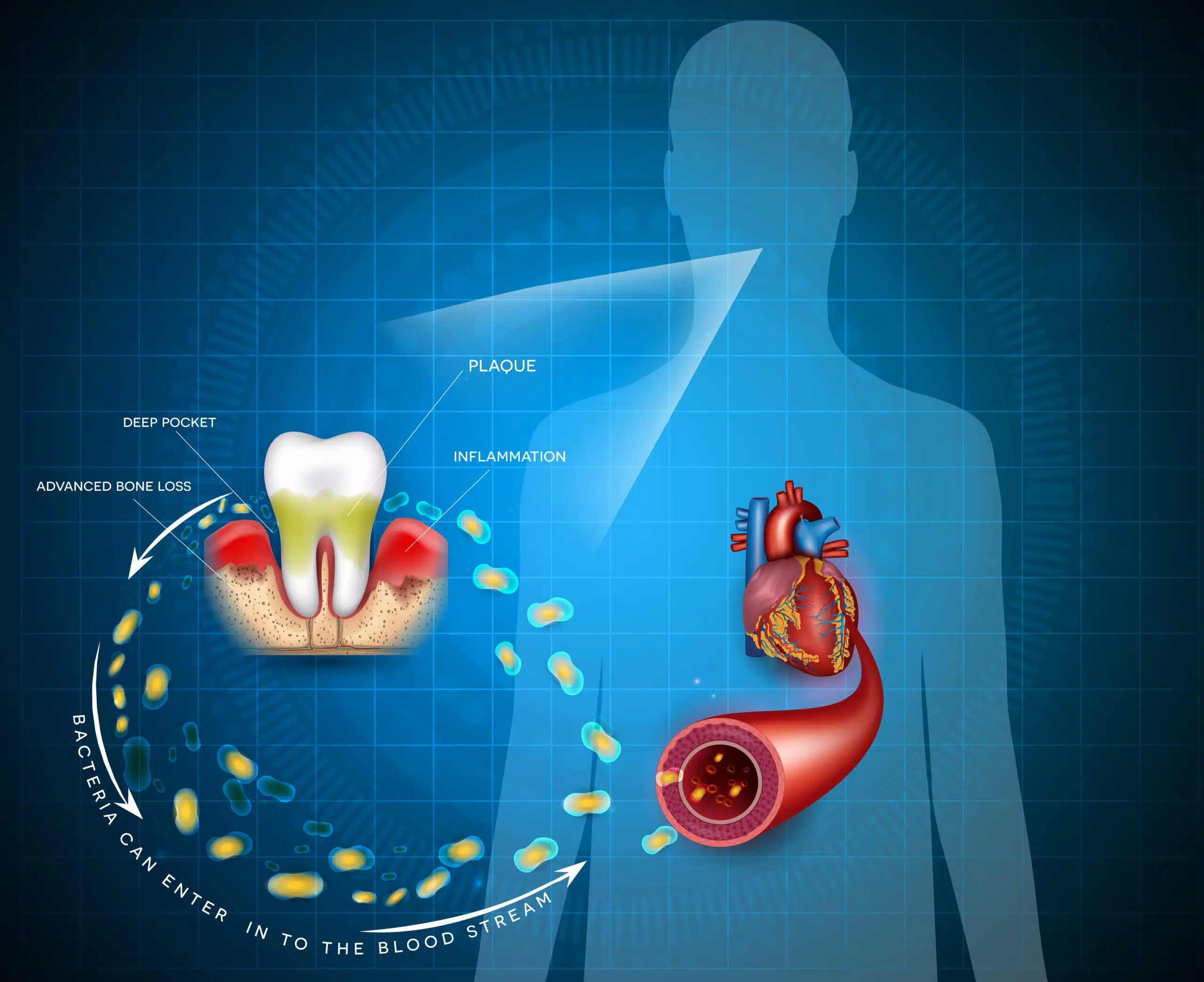
Gingival and periodontal diseases, often silent in their early stages, can have serious consequences for oral and general health if left untreated. Periodontitis, an advanced form of gum disease, deserves special attention. Let’s explore the stages of development of this condition, its effects on dental tissues — which can lead to tooth loss — as well as the risks it poses to the body as a whole.
The development of gingival and periodontal disease
It generally begins with gingivitis, a reversible inflammation of the gums caused by the accumulation of dental plaque.
Typical signs of gingivitis:
- Red, swollen, and more sensitive gums.
- Bleeding when brushing or flossing.
If left untreated, gingivitis can progress to periodontitis. At this stage, bacteria penetrate deeper beneath the gum line, around the roots of the teeth. The proliferation of large numbers of bacteria triggers an excessive immune response, and they release toxins. These phenomena eventually cause irreversible tissue damage.
Tissue destruction
Periodontitis does not affect only the gums. It causes progressive destruction of the tissues that support the teeth, including:
- The cementum, which covers the tooth roots.
- The periodontal ligaments, which hold the teeth in place.
- The alveolar bone, which supports the dental roots.
Over time, this deterioration creates deep pockets between the tooth roots and gums, making the elimination of bacteria even more difficult. These pockets worsen if treatment is not initiated, accelerating the destruction of supporting structures.
Tooth loss
When periodontitis reaches an advanced stage, teeth become mobile due to the weakening of the surrounding tissues and bone.
Consequences of tooth loss:
- Reduced chewing ability, leading to dietary limitations.
- Consequences for remaining teeth, such as misalignment or premature wear.
- Premature aging of the lower face.
- Negative psychological impacts related to the appearance of the smile.
Possible consequences of periodontitis for general health
Periodontitis is serious, and its effects can impact the entire body. The bacteria responsible for tissue infection can enter the bloodstream, triggering systemic inflammatory responses.
General health risks include:
- Cardiovascular disease: periodontitis is associated with an increased risk of stroke and heart attack due to chronic inflammation that can affect the arteries.
- Diabetes: a bidirectional relationship exists between diabetes and periodontitis. Poor management of one can worsen the other.
- Respiratory problems: oral bacteria can be inhaled, contributing to pulmonary infections, particularly in elderly individuals.
- High-risk pregnancy: periodontitis is linked to an increased risk of premature birth and complications associated with low birth weight.
Prevention and treatment of periodontitis: effective solutions
The good news is that periodontitis can be prevented or controlled through rigorous prevention and professional care.
Key prevention steps include:
- Daily oral hygiene (brushing and flossing).
- Regular dental visits for professional cleanings.
- A balanced diet providing all the nutrients needed for healthy gums.
For more advanced cases, treatments such as root planing, antibiotics, or even periodontal surgery may be necessary.
Take care of your gums to preserve your overall health
Periodontitis is much more than a simple gum disease: its consequences can affect your entire body. If you notice signs such as bleeding gums, persistent bad breath, or loose teeth, do not wait to consult a professional. At Centre Dentaire Taschereau, our team is here to guide you every step of the way and direct you toward solutions tailored to your needs.