

2026 Dental Aesthetic Trends for a Beautiful Smile
A clear guide to the materials, technologies, and approaches that help you achieve a natural, harmonious, and lasting smile.
In 2026, dental aesthetics is no longer about uniform whiteness or magazine-style standardized smiles. Innovations in ceramics, bonding protocols, and digital tools now make it possible to achieve results that look like your own teeth — only better. Yet many patients don't realize that these advances are already accessible today at a dental clinic near them. This guide walks you through the trends redefining dental aesthetics, so you can make informed choices and rediscover a smile that is natural, lasting, and truly yours.
Key Points
| Point | Details |
|---|---|
| Next-generation ceramics | Materials such as multilayer zirconia and E-max combine aesthetics, strength, and a natural appearance. |
| Digital planning | AI and 4D simulation allow you to visualize and personalize your smile before any treatment begins. |
| Case-specific selection | Ceramic veneers are ideal for visible teeth; zirconia is preferred for high-load areas requiring greater strength. |
| Follow-up and maintenance | Regular professional maintenance extends the beauty and durability of restorations. |
What Materials for a Natural Smile?
One of the most significant developments in recent years concerns the materials themselves. Dental ceramics, once limited to a few shades and sometimes displaying a slightly artificial appearance, have improved considerably.
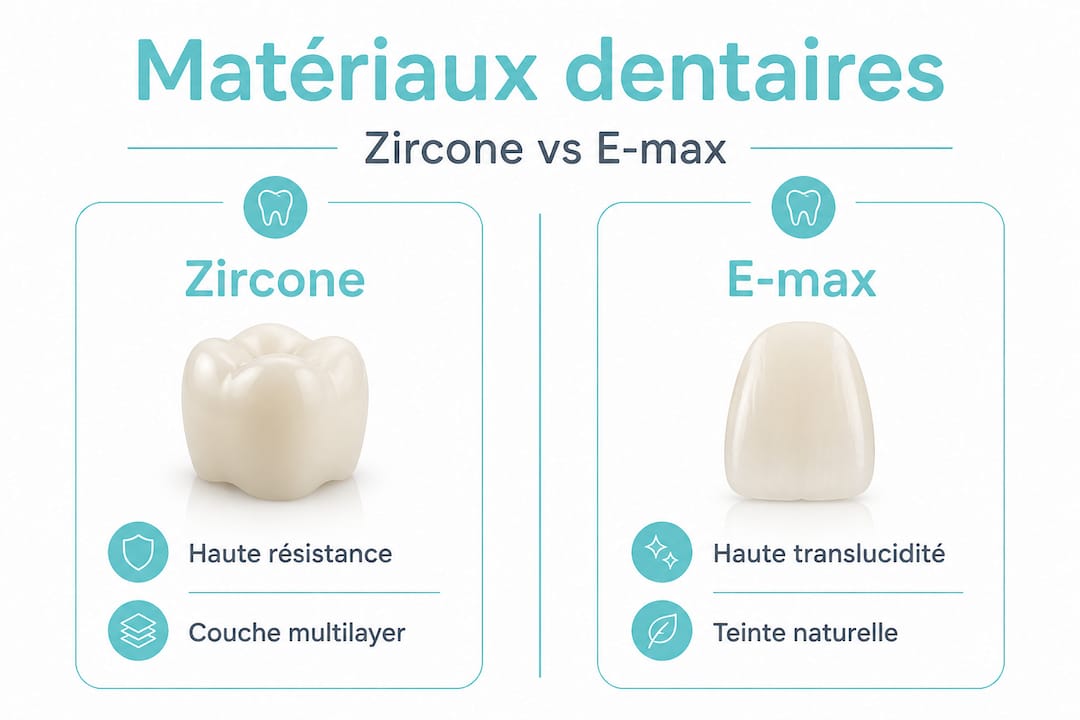
Multilayer zirconia represents a major advance today. Thanks to its layered structure, it reproduces the natural gradient of the tooth — more opaque at the base and more translucent toward the edge. The 3DPro Zir version offers 46 to 52% translucency and a flexural strength of 1,200 to 1,400 MPa, making it one of the strongest and most aesthetic materials available.
E-max glass ceramic remains the benchmark for restorations in the visible smile zone. Its exceptional translucency and ability to capture light like a real tooth make it the material of choice for anterior veneers and crowns.
Shade selection is just as critical as the material itself. The VITA shade guide now offers 35 distinct shades to harmonize perfectly with your natural teeth. A poor shade choice, even with the best material, can produce a visible and unnatural result.
Comparison of Main Ceramic Materials
| Material | Translucency | Strength | Recommended Use |
|---|---|---|---|
| Multilayer zirconia | 46 to 52% | 1,200 to 1,400 MPa | Anterior and posterior crowns |
| E-max (glass ceramic) | Very high | 400 to 500 MPa | Anterior veneers and crowns |
| Monolithic zirconia | Moderate | Over 1,100 MPa | Posterior areas under high load |
Criteria to evaluate when choosing the right material:
- Location in the mouth: the front requires translucency; the back requires strength
- Condition of the tooth: a weakened tooth may need greater protection
- Desired shade: some materials offer more customization options
- Budget: prices vary depending on the material and complexity of the case
To take care of your teeth after a ceramic restoration, rigorous hygiene and regular check-up visits are essential to preserve the result achieved.
Crowns or Veneers: Which Solution to Choose in 2026?
Once you understand the materials, the often-asked question arises: should you go with a crown or a veneer? This choice depends on several specific clinical factors.
A dental veneer is a thin ceramic shell (between 0.3 and 0.7 mm thick) bonded to the visible surface of the tooth. It is ideal for correcting colour, shape, or minor irregularities, with minimal preparation of the natural tooth. Learn about the advantages of veneers to evaluate whether this option suits your situation.
A crown, on the other hand, covers the entire tooth. It is indicated when the tooth structure is heavily damaged, after a root canal treatment, or when the tooth shows advanced wear.
Zirconia veneers are technically feasible, but their translucency remains lower than that of glass ceramics. They are better suited to posterior teeth or situations where mechanical resistance takes priority over pure aesthetics. For anterior teeth visible when smiling, glass ceramics remain the reference choice.
Bonding protocols have also evolved. Current adhesive resins allow for a stronger bond between the veneer and the tooth, improving longevity and reducing the risk of debonding.
Typical steps in a veneer treatment:
- Consultation and diagnosis: evaluation of your teeth, occlusion, and expectations
- Result simulation: use of digital tools to visualize the final appearance
- Minimal preparation of the tooth if necessary
- Digital impression to transmit data to the dental technician
- Laboratory fabrication with the selected material
- Placement and bonding with occlusion verification
- Follow-up check to ensure proper integration
Pro tip: If you want to improve your visible smile (the six to eight front teeth), always favour E-max glass ceramic. Its ability to refract light like a real tooth cannot be replicated by standard zirconia.
When Technology Enhances Your Smile: AI, DSD, and Augmented Reality
Choosing the right solution is no longer just about the material. Smile planning has become fully digital, and the results are more predictable than ever.
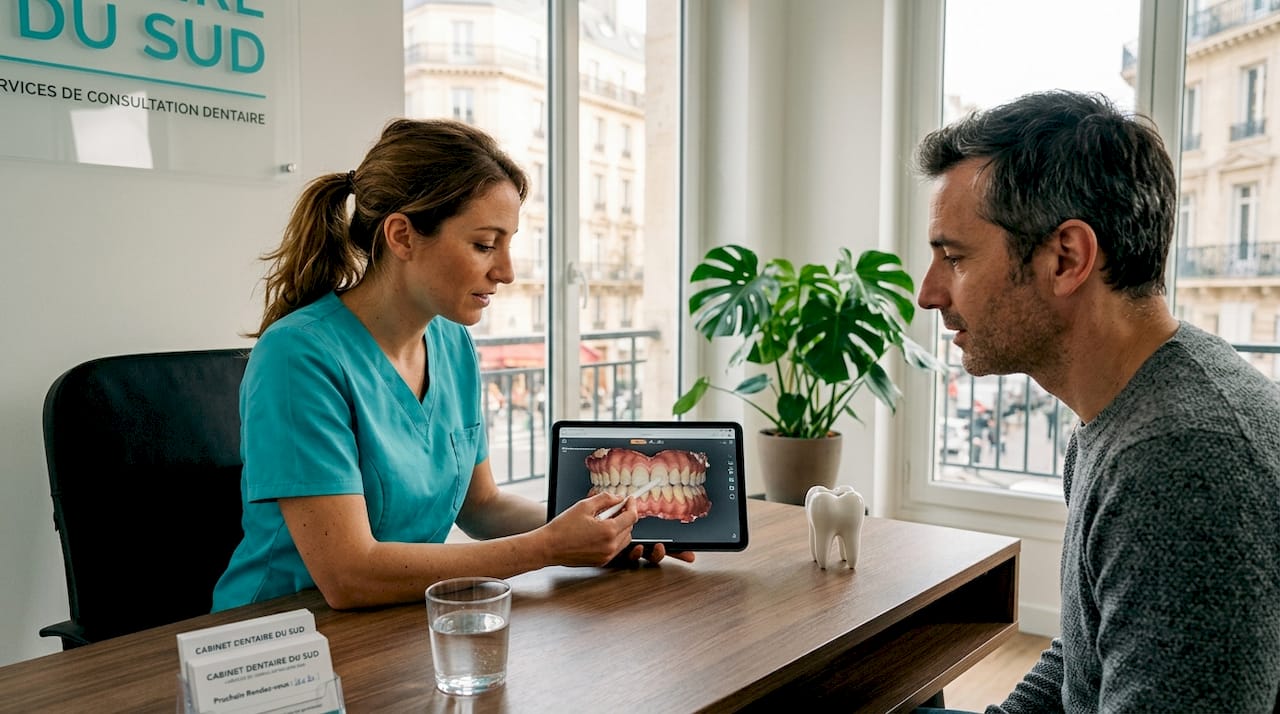
Digital Smile Design (DSD) uses photos, videos, and modelling software to create a simulation of your future smile. Before a single tooth is prepared, you can see exactly what the final result will look like.
The integration of AI into DSD reduces communication errors between patient, dentist, and dental technician, and significantly improves precision. The near future includes 4D simulations and augmented reality experiences where you can literally "try on" your smile in real time before any intervention.
Modern cosmetic dentistry relies on these tools to transform the patient experience. Anxiety about the final result diminishes considerably when you can visualize and approve the plan in advance.
Main advantages of advanced dental technologies:
- Precise visual simulation: the patient approves the project before placement
- Optimized communication between dentist and dental laboratory
- Fewer adjustments at the final placement stage
- Time savings throughout the treatment journey
- Greater patient satisfaction through active involvement in decisions
To stay informed about the latest innovations, the clinic's dental blog publishes regular articles on these topics.
The Criteria for a Perfect and Lasting Result
Even the best material does not produce lasting results without proper follow-up. Modern bonding protocols combined with multilayer translucent zirconia considerably increase the strength and durability of restorations, but your role as a patient remains decisive.
Key points for preserving your smile over time:
- Brush twice a day with a soft-bristled toothbrush to avoid abrading the materials
- Daily flossing or water flossing to prevent tartar buildup around restorations
- Avoid biting very hard foods such as ice or hard candies
- Wear a night guard if you clench or grind your teeth (bruxism)
- Regular check-up visits to detect early signs of wear or debonding
When choosing your practitioner, ask: do they use digital simulation? Do they work with a ceramics-specialist laboratory? Do they have a before/after portfolio? These details make all the difference in the final result.
To prepare for resolutions for a beautiful smile, start with a comprehensive assessment with your dentist.
Pro tip: Schedule a professional review of your veneers or crowns every 2 to 5 years. Even if everything seems perfect, a preventive check-up catches minor wear or microcracks before they become a problem.
Our Perspective: Avoiding the Glamour Race, Betting on Natural Harmony
At Clinique dentaire Taschereau, we observe a trend we welcome with enthusiasm: patients increasingly want not a "perfect" Hollywood smile, but a smile that truly looks like them.
The temptation of extreme whiteness or perfectly uniform teeth dominated dental aesthetics for years, but often produced results that aged poorly and lacked expression. An overly uniform smile can paradoxically seem less attractive than one that is slightly imperfect but coherent with the face.
What clinical experience teaches us is that long-term satisfaction comes from harmony, not excess. A shade slightly warmer than pure white integrates better with skin tone and eye colour. Teeth proportionate in size to the face produce a more expressive smile. Modern cosmetic dentistry fully recognizes this, placing individuality at the centre of the treatment plan.
Our sincere advice: be wary of overly spectacular before/after photos. Look instead for a practitioner who speaks about facial harmony and proportions, and who takes the time to listen to what you want to express with your smile.
Book an Appointment to Make Your New Smile a Reality
The innovations in this article are available right now in Brossard. A personalized consultation is the essential first step: it allows for evaluation of your situation, an accurate diagnosis, and a treatment plan tailored to your goals and budget.
Clinique dentaire Taschereau offers a wide range of cosmetic dentistry solutions in Brossard — from ceramic veneers and crowns to digital smile simulation. Our team takes the time to explain every step and involve you in the decisions. Explore all of our dental care in Brossard and contact us to schedule your initial consultation. Your smile deserves an approach as unique as you are.
Frequently Asked Questions About 2026 Dental Aesthetic Trends
What materials are the most durable for dental veneers in 2026?
E-max glass ceramic and multilayer zirconia both offer excellent resistance and longevity. Zirconia's flexural strength exceeds 1,100 MPa, making it one of the most robust materials available.
Can you simulate your future smile before cosmetic treatment?
Yes, Digital Smile Design combined with AI allows you to visualize a virtual smile before any intervention. 4D augmented reality simulations are also in development.
Are zirconia veneers suitable for all teeth?
They are better suited to posterior teeth or those under heavy chewing load. For visible anterior teeth, glass ceramics remain the standard for their superior translucency.
How do you maintain crowns or veneers to maximize their lifespan?
Regular check-ups, rigorous hygiene, and a professional review every 2 to 5 years optimize durability. Modern bonding protocols also increase long-term material resistance.