
Children's dentistry

Dentists, dental hygienists and parents: allies for toddlers' health
Parents: it's one of the parents' duties to look after their children's health and well-being, especially that of their mouths and teeth. As such, it's important to take care of your toddler's oral hygiene (cleaning the mouth after drinking, brushing teeth as soon as they appear, flossing), from the very first months of life. Parents also have a supporting and educational role to play. They are in the best position to teach their offspring how to carry out the hygiene routine, and to help them develop healthy habits.
The dental team: the dentist and hygienist are there to ensure that the little patient's mouth and teeth are in good condition. This is achieved through preventive and curative care tailored to or reserved for them (examination and cleaning, sealant application, cavity care). The dental team also contributes to children's dental education with valuable advice.
Care adapted to young patients
Because we take children's oral health to heart, we make sure we offer appropriate dentistry services. As a result, the team is able to modify its approach and actions to adapt to young patients' fears and unique challenges. So we make sure their experience is a positive one. In this way, there's a greater chance that basic dental care will become a lasting habit!
It's important to take care of children's oral health, as their developing mouths are vulnerable to disease and illness. We offer preventive treatments (examination, cleaning and fluoride application, personalized advice) to keep them under control and avoid many problems.
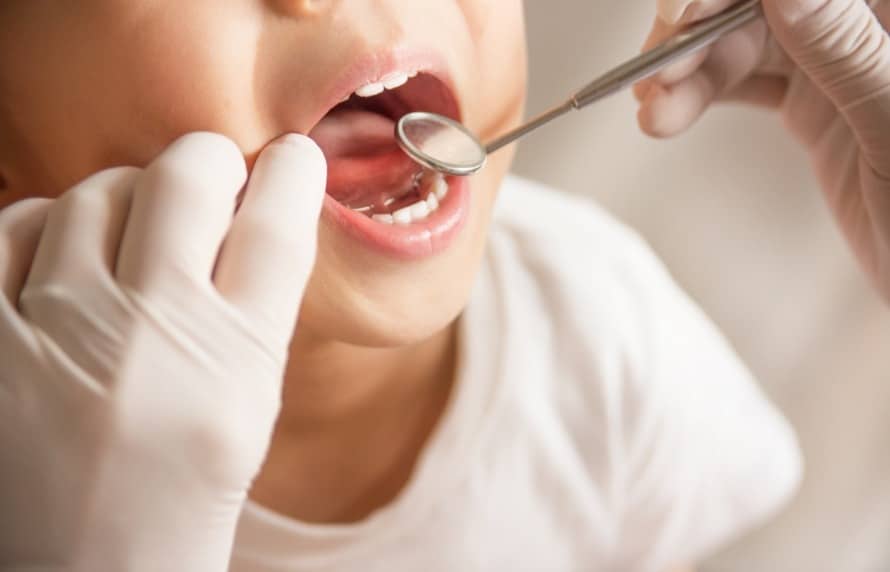
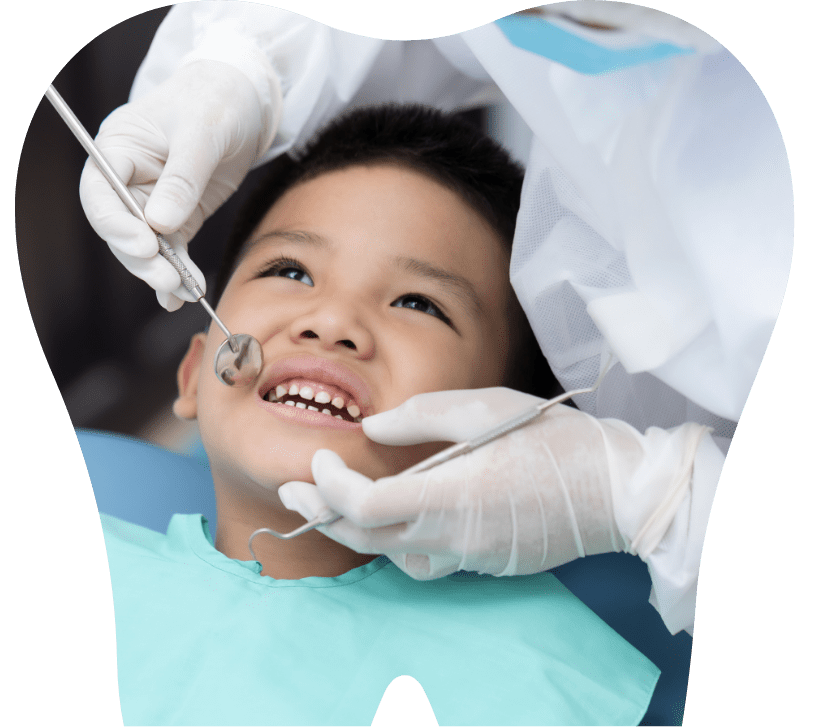
Milk teeth are particularly vulnerable, as their enamel is softer. Early childhood caries, the infection that specifically affects them, can therefore easily develop and spread. It's important to prevent and treat it.
Premolars and molars have grooves and crevices that make them vulnerable to the action of bacteria. We offer dental sealants to increase their protection against decay, particularly in the period following eruption.
Book an appointment
When should my child have their first dental visit?
The Canadian Dental Association recommends scheduling a child's first dental appointment within six months of the first tooth erupting — or by the time they turn one year old, whichever comes first. This may feel early, but early visits serve a clear purpose: they allow our team to catch any concerns before they become problems, and they help your child build a positive relationship with dental care from the very beginning.
At Centre dentaire Taschereau in Brossard, we welcome children at every stage of development — from toddlers experiencing their first teeth to teenagers navigating orthodontic changes. Our goal is to make every visit comfortable, so that good oral hygiene becomes a natural part of life for your child, not something to dread.
What happens at a children's dental appointment?
A first visit for a young child is gentle and exploratory. There are no surprises and no procedures your child hasn't been told about beforehand. Here is what you can typically expect:
- A warm welcome — Our team takes time to greet your child at their level, introducing them to the chair, the light, and the instruments in a calm, unhurried way.
- An oral examination — The dentist checks the teeth, gums, jaw, and bite for any signs of decay, developmental irregularities, or habits that may affect alignment.
- Professional cleaning — A gentle cleaning removes plaque and tartar buildup that brushing at home cannot fully reach.
- Fluoride application — When appropriate for your child's age and risk level, a fluoride treatment helps strengthen enamel against cavities.
- Personalized guidance for parents — We take time to answer your questions: how to brush properly, what foods to limit, when to expect new teeth, and how to handle common habits like pacifiers or thumb-sucking.
Subsequent visits follow the same rhythm, adjusted as your child grows. For children six and up, X-rays may be taken periodically to monitor developing permanent teeth below the surface.
Why baby teeth matter
A common misconception is that baby teeth don't need the same care as permanent teeth — after all, they fall out anyway. In reality, primary teeth serve several critical functions that affect your child's long-term oral health:
Why primary teeth deserve care
- They hold space for permanent teeth to erupt in the right position. An early tooth loss can cause neighbouring teeth to drift and crowd incoming adult teeth.
- They support speech development. Teeth play a direct role in how children form sounds and words.
- They enable proper chewing, which affects nutrition and digestion at a formative age.
- They build confidence. A healthy, comfortable smile helps children engage socially and speak without hesitation.
Treating a cavity in a baby tooth is not just about saving that tooth — it is about protecting the health of the whole developing mouth.
Preparing your child for a positive first visit
A little preparation at home goes a long way toward a calm appointment. Our team recommends the following:
- Talk about it positively. Use simple, upbeat language: "We're going to meet the tooth doctor — they keep your teeth strong and shiny." Avoid words like "needle," "hurt," or "don't worry" (which can inadvertently plant worry).
- Read books or watch videos together featuring a child at the dentist — familiarity reduces the unknown.
- Schedule the appointment at a good time of day — when your child is rested and not due for a nap. Mid-morning is often ideal for young children.
- Bring a comfort item — a favourite toy or stuffed animal is welcome in the chair.
- Stay calm yourself. Children pick up on parental anxiety. If you find dental visits stressful, let our team guide the interaction — we are experienced at helping children feel at ease.
Frequently asked questions — children's dentistry in Brossard
At what age should my child start brushing independently?
Most children develop the fine motor skills needed for effective solo brushing around age 7 or 8. Until then, parents should brush alongside their child — first doing it for them, then watching and correcting technique as they practise. Using a timer (two minutes) and a pea-sized amount of fluoride toothpaste helps make the routine effective and easy to follow.
My child is afraid of the dentist. What can your team do?
Dental anxiety in children is very common and completely manageable. Our team is experienced in child-centred care: we move slowly, explain each step before we do it, and always give your child the ability to signal if they need a pause. For children with significant anxiety, we can discuss options such as a purely exploratory first appointment with no treatment at all — simply to make a friend and see the chair. Building trust takes time, and we are happy to take that time.
Is thumb-sucking or pacifier use harmful for my child's teeth?
Thumb-sucking and pacifier habits are normal in infants and young toddlers. Problems typically arise when the habit continues past age 3–4, at which point it can affect the alignment of incoming permanent teeth and the shape of the palate. If your child is still sucking their thumb at age 4 or beyond, mention it at your next appointment — we can assess whether it is affecting development and suggest gentle strategies to help them move on from the habit.
Does Centre dentaire Taschereau accept the Canadian Dental Care Plan (CDCP) for children?
Yes. Centre dentaire Taschereau participates in the Canadian Dental Care Plan (CDCP), which provides coverage for eligible children and families. If you are not sure whether your family qualifies, you can check eligibility directly through the Government of Canada website or ask our administrative team at your next visit — we are happy to help you understand what is covered.
How often should my child see the dentist?
For most children, a check-up and cleaning every six months is the standard recommendation. Some children with higher cavity risk or active orthodontic monitoring may benefit from more frequent visits. Our team will advise a recall schedule that suits your child's individual needs.
Can I stay in the room with my child during the appointment?
Absolutely — especially for very young children or first-time visitors. Your presence is a comfort to your child, and our team welcomes parents in the treatment area. As children grow more comfortable over successive visits, some prefer a bit of independence during their appointment, but that is always their choice to make.
Ready to book your child's first appointment?
We are always happy to welcome new families at Centre dentaire Taschereau in Brossard. Call us at (450) 912-1688 or fill out our online appointment request form.
Contact us